Good artificial grass drainage in Milton starts underground, long before the turf goes down. Milton sits on the flat clay plain below the Niagara Escarpment, and Halton Region soil is heavy clay loam that holds water rather than letting it soak away. Add the compacted fill and thin topsoil that most newer subdivisions were built on, and you have ground that puddles after a storm and freezes hard in winter. Turf itself drains beautifully through its perforated backing, so when a synthetic lawn holds water, the base underneath is almost always the reason. Getting that base right is the single most important part of a lasting install here.
Why does base prep matter so much on Halton clay?
Base prep matters most here because Halton's clay does not drain on its own. In a sandy region, water leaving the turf backing soaks straight into the ground. On Milton clay it cannot, so the crushed stone base has to do the work of collecting water and moving it out to the edges and away from the yard. Skip that layer or lay it too thin, and rain that passes through the turf simply sits on the clay, softens the surface, and can freeze into an uneven, spongy lawn. A well-built base is what separates turf that still looks new in ten years from turf that goes lumpy in two.
What a proper turf base looks like in Milton
A dependable base on Halton clay is built in layers. The exact depths depend on your lot and use, but the sequence is consistent.
Excavation
The old lawn and topsoil come out, usually to a depth of 75 to 100 mm, sometimes more where the clay is very soft or the yard has to be re-levelled. On lots near Sixteen Mile Creek and other low-lying areas where the water table sits higher, we often dig deeper and build a thicker drainage layer.
Crushed stone base
A layer of angular crushed stone, such as a 19 mm clear stone or a graded granular, goes down and gets compacted in lifts. On clay this base does double duty: it carries the water and gives the turf a firm, stable platform that will not shift with the freeze-thaw cycles Milton sees all winter. A geotextile fabric between the clay and the stone stops the two from mixing over time.
Grading for fall
The base is shaped with a slight, deliberate slope, generally around one to two per cent, so surface water always has somewhere to run. On a flat Milton backyard this fall is planned to carry water toward a low edge, a garden bed, or an existing catch basin, and never toward the house foundation.
Compaction and the top layer
A finer bedding layer of stone dust or fine granular is screeded and compacted to a smooth, hard surface. This is what gives you a flat lawn with no dips, and a properly compacted base is the step DIY installs most often get wrong.
Milton lot conditions to plan around
No two yards drain the same. These are the local conditions the Artificial Grass Milton team looks at during a site visit.
- Compacted builder fill: Master-planned subdivisions off Louis St. Laurent Avenue and Derry Road often sit on heavily compacted fill that drains slowly and needs a deeper stone base.
- Low spots and high water table: Yards near Sixteen Mile Creek or at the bottom of a grade collect runoff and may need a French drain or a connection to existing drainage.
- Escarpment properties: Homes toward Kelso and the escarpment edge can have thin soil over dolostone bedrock, which changes how deep you can dig and where water goes.
- Downspouts and sump lines: We keep turf drainage separate from roof and sump water so the two systems do not overload each other during a heavy Halton storm.
Signs of a drainage problem after install
If your turf was installed on a poor base, the symptoms show up fast. Watch for water pooling on the surface for more than a minute after rain, soft or spongy patches underfoot, a sour smell in pet areas, or visible dips that appear after the first winter. Any of these usually trace back to too little stone, poor compaction, or grading that runs the wrong way. The turf is rarely the culprit. A good installer can lift a section, correct the base, and relay it.
Why this is hard to DIY on Milton clay
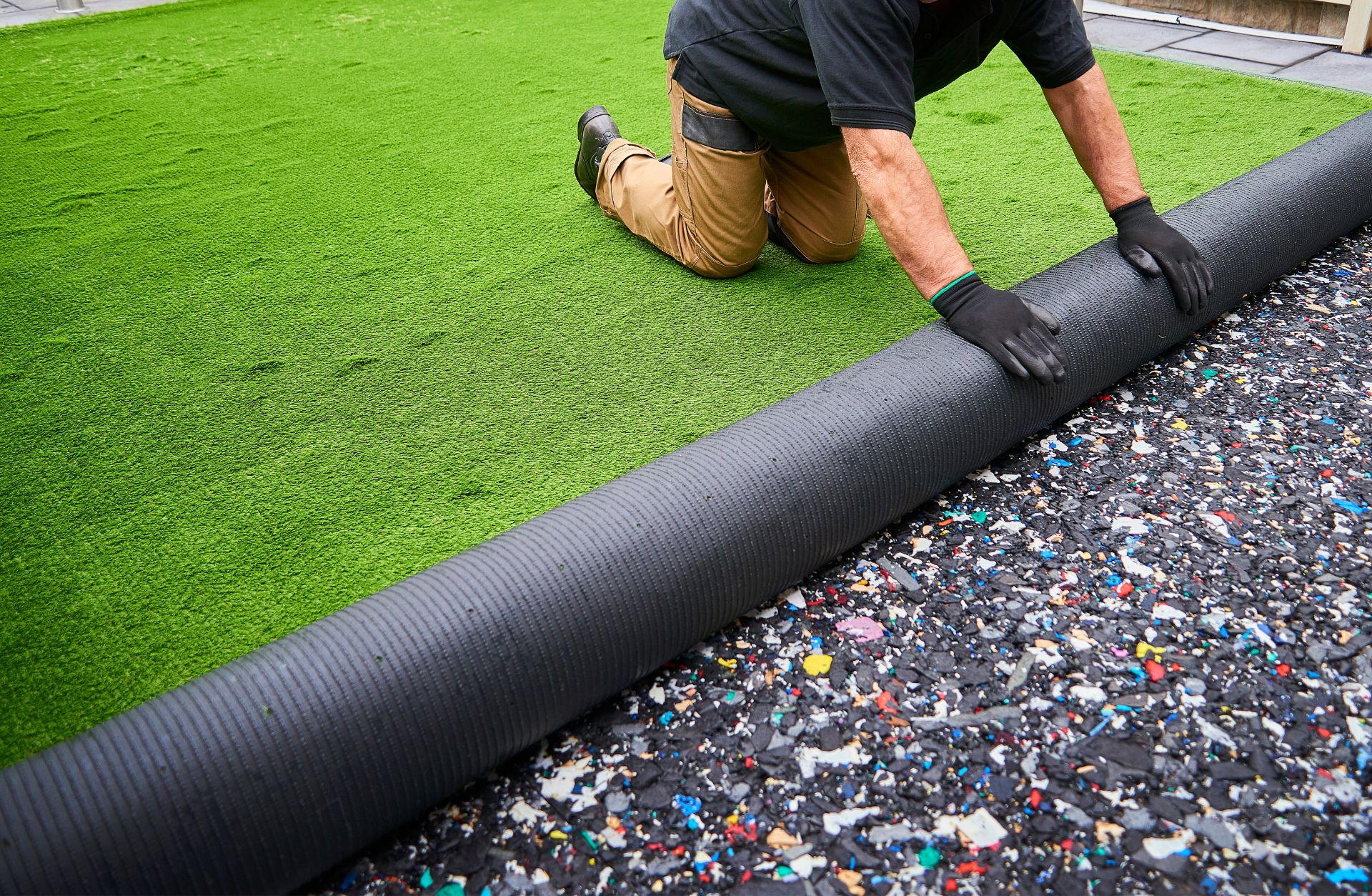
Laying turf over existing sod or a shallow base is the classic weekend shortcut, and on Halton clay it fails within a season or two. Proper excavation depth, the right stone, a geotextile separator, planned grading, and plate compaction all take equipment and experience most homeowners do not have on hand. Because the base is buried, mistakes are expensive to fix later. For the price of doing it twice, it is usually cheaper to build it right the first time.
Not sure how your yard drains? Ask the Artificial Grass Milton team for a site assessment, and read our Milton cost guide to see how base work factors into a quote.
Frequently Asked Questions
Does artificial grass drain well on Milton's clay soil?
The turf drains well on its own, but Halton clay underneath does not. That is why a compacted crushed stone base with proper grading is essential in Milton. It collects the water passing through the turf and carries it away so nothing pools on the clay below.
How deep should the base be for turf in Milton?
Most Milton installs excavate about 75 to 100 mm and build a compacted crushed stone base, though low-lying or very soft clay lots need more depth and sometimes added drainage. The right depth is set on-site based on how your yard drains.
Why is my artificial grass holding water?
Standing water almost always means a base problem, not a turf problem. Common causes are a base that is too thin, poor compaction, or grading that runs toward the house instead of away. An installer can lift the affected area, fix the base, and relay the turf.
Get a free quote for your Milton yard
Want a base built to handle Halton clay? Call (289) 670-7938 or request a free quote, and we will assess your drainage before we quote a single square foot.